General
How to Write Instagram Cold DMs That Get Replies
How to write Instagram cold DMs people actually answer: line-by-line structure, opener types, easy questions, 6 before-and-after rewrites and a checklist.
By ColdNerd Team · October 16, 2026 · 10 min read
How to Write Instagram Cold DMs That Get Replies
Most cold DMs don't get ignored because the offer is bad. They get ignored because replying feels like work.
A stranger opens your message. In a couple of seconds they decide whether it's spam, whether it's about them, and whether answering will cost them anything. If the message is long, vague or ends with "want to hop on a call?", the easiest option is to do nothing. So they do nothing.
The short answer: Instagram cold DMs that get replies are short (two to four lines), open with something specific about the person rather than about you, connect that detail to a problem in one sentence, and end with one easy question they can answer in a few words. They don't pitch, don't include a link, and sound like a person typing on their phone.
This guide is about the writing itself: how to open, what to ask, what to cut, and how to edit a message until it's easy to reply to. If you want the full outreach process, including targeting, rules and follow-up timing, start with our Instagram cold outreach guide.
The one rule behind every good cold DM
Make replying easier than ignoring.
Every choice in a cold DM either lowers or raises the effort it takes to answer. A specific opener lowers it, because the person instantly understands why you're writing. A simple question lowers it, because they know exactly what to say. A paragraph about your agency raises it. So does a calendar link, or a question that needs thought.
When you're unsure whether to keep a sentence, ask: does this make it easier or harder for them to reply? If harder, cut it.
Anatomy of a cold DM that gets replies
A reliable first message has three lines. Each has one job.
Line | Job | Example |
|---|---|---|
1. Opener | Prove it's about them | "Your carousel on pricing mistakes for new salons was really clear." |
2. Bridge | Connect it to a problem you solve | "I've noticed a lot of salon owners get great engagement on posts like that but few bookings from them." |
3. Question | Make replying effortless | "Is that something you've seen too, or are those posts bringing people in?" |
That's it. No introduction, no credentials, no offer. Those come later, once they've replied and want to know more.
Why there's no introduction
"Hi, my name is Sam and I run a marketing agency that helps businesses grow" uses the most valuable space in the message to talk about you. It also matches the pattern of thousands of spam DMs. Your name and profile are already at the top of the chat. If they're curious, they'll tap them.
How to write the opener
The opener decides whether the rest gets read. Messages from people someone doesn't follow land in their message requests, where your name and the start of your message are often all they see before deciding to open it. So the first few words should be about them, not "Hey!" or "Hope you're well".
Five opener types that work
Specific post: "Your Reel on fixing a squat with one cue was great."
Recent change: "Congrats on opening the second studio."
Audience reaction: "Loads of people in your comments asked where to buy the serum."
Business detail: "Saw you've started taking online bookings through the link in your bio."
Shared context: "Saw your comment on [account]'s post about slow summer months."
What makes an opener fail
Generic praise: "Love your content!" could be sent to anyone, so it reads as automated.
Over-the-top flattery: "Your brand is absolutely incredible" makes people suspicious, not flattered.
Old or obscure details: a post from two years ago feels like stalking, not interest.
Personal details: stick to their business and public content, not their family or private life.
A good opener is specific, recent, public and business-related.
How to write the bridge
The bridge turns "nice observation" into "this person might be useful". It's one sentence, and the best ones describe a common problem, not your service.
Compare:
Service-led: "We offer content strategy and Reel editing packages."
Problem-led: "A lot of coaches I talk to get views on Reels like that but find they don't turn into enquiries."
The problem-led version lets them recognise themselves. If the problem is real for them, they'll want to talk about it. And notice that you haven't said what you sell, which makes the next message easier.
Useful bridge starters:
"A lot of [their niche] I talk to..."
"I've noticed [specific pattern] with [their niche]..."
"Usually when [thing you noticed] happens, [common problem] follows..."
How to write the question
The question is where most cold DMs go wrong. A good one can be answered in a few words, without thinking hard and without committing to anything.
Easy vs hard questions
Hard to answer | Easy to answer |
|---|---|
"Would you be open to a call to discuss your growth strategy?" | "Are you handling content yourself at the moment?" |
"What are your biggest marketing challenges?" | "Is getting bookings from Instagram a focus this year, or not really?" |
"Can I send you a proposal?" | "Would it help if I sent over two quick ideas for your next Reel?" |
"How much do you spend on ads?" | "Are the ads mostly for the new programme?" |
The easy versions share three things: they're specific, they can be answered with a yes, a no or a few words, and they don't ask for time or money.
Question types to rotate
Situation: "Are you editing these yourself?"
Priority: "Is this a focus for this quarter, or later?"
Permission: "Want me to send a quick idea?"
Opinion: "Have you noticed the same, or is it working well for you?"
Permission questions are especially useful. They let the person choose to receive something, which feels very different from being sold to.
Length, format and tone
Length: two to four short lines. If it needs scrolling on a phone, it's too long. Instagram does cap messages at about 1,000 characters, but a good cold DM should be nowhere near that.
Format: one message, not three in a row. Short line breaks are fine. No bullet points, no bold, no long signatures.
Tone: write like you'd text a professional you respect. Contractions, plain words, and one emoji at most if it suits the niche. Read it out loud. If it sounds like a press release, rewrite it.
No links in the first message. Links from strangers look like spam and give people a reason not to open your message. Share a link once they've replied.
Words and phrases to cut
"I hope this message finds you well"
"I came across your profile and..."
"We help businesses grow" (or scale, or 10x)
"Quick question" before a question that isn't quick
"Just reaching out to..."
"I'd love to hop on a quick call"
"No pressure, but..."
They add length, sound templated and say nothing about the person.
Six before-and-after rewrites
Here's the structure applied to real-looking messages agencies and freelancers send.
1. Social media agency to a restaurant
Before: Hi! We're a social media agency helping restaurants grow their online presence. We'd love to discuss how we can help you get more customers. Are you free for a call this week?
After: Your Reel of the new brunch menu looked amazing, especially the pancake stack. Do you find posts like that bring people in on the weekend, or is it mostly regulars?
2. Freelance video editor to a coach
Before: Hey, I'm a video editor with 5 years of experience. I can make your Reels more engaging. Check out my portfolio: [link]
After: Your Reel on morning routines for busy mums was so relatable. Are you editing these yourself? The hook in the first second could pull a lot more people in.
3. Web designer to a clinic
Before: I noticed your website could be improved. I design modern, high-converting websites. Would you be interested?
After: Saw you've started taking bookings through the link in your bio. Is most of your booking traffic coming from Instagram now, or still mostly Google?
4. Ads agency to an ecommerce brand
Before: We're Meta ads experts and have scaled brands like yours to 6 figures. Can I show you how?
After: Saw you're running ads for the new candle collection. The one with the cosy flat-lay is great. Are those mostly driving sales, or more for awareness right now?
5. Copywriter to a SaaS founder
Before: Hi, I write conversion copy for SaaS companies. I'd love to help with your landing page.
After: Congrats on the launch! Your post about the first 100 users was a good read. Are you mostly finding users through content at the moment, or doing outbound too?
6. Photographer to a real estate agent
Before: Hello! I'm a professional real estate photographer. Here are my packages and prices.
After: Your listing tour of the Elm Street house got loads of comments. Are you shooting the photos yourself or working with someone?
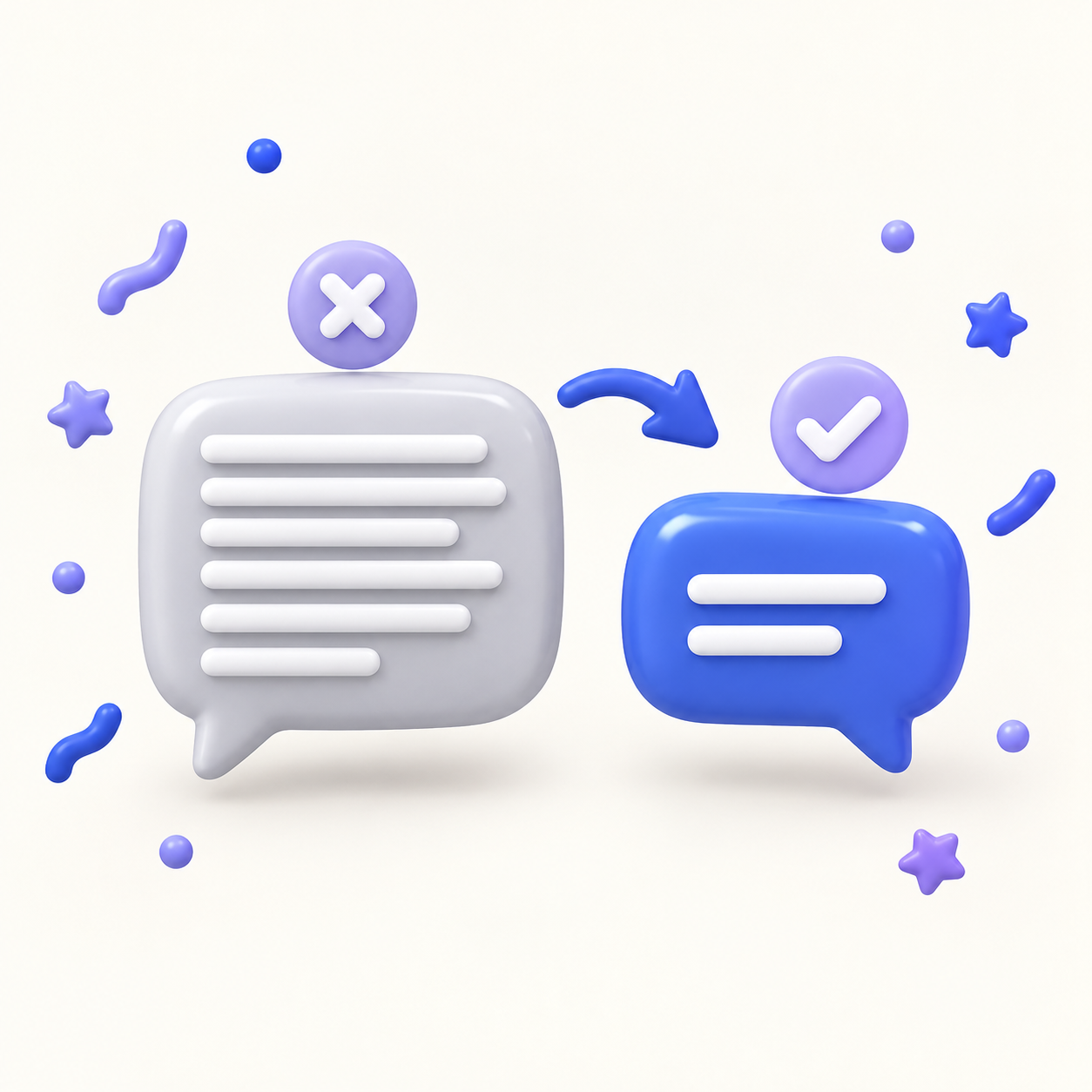
In every "after", the message is shorter, it starts with them, the problem is implied rather than pitched, and the question takes a few seconds to answer.
What to write in follow-ups
If they don't reply, one or two follow-ups are reasonable. More than that starts to feel like pressure. Each follow-up should be shorter than the first message, and the second one should add something.
Follow-up 1 (a few days later): short and light.
"Just bumping this in case it got buried, curious whether those weekend posts bring people in."
Follow-up 2 (about a week later): add value, then let go.
"One quick idea for your next menu Reel: open on the moment the syrup hits the pancakes, it stops the scroll. No worries if now's not the time, good luck with the brunch launch!"
Stop as soon as they reply, and never follow up after a no. For the reasons behind keeping it to two, see the cold outreach guide.
What to write when they reply
The reply is where the real conversation starts, and where many people rush.
Answer them properly first. If they asked a question, answer it before asking yours.
Ask one follow-up question about their situation: what's working, what isn't, whether it's a priority.
Offer something small before something big: "Want me to record a two-minute video with a couple of ideas?" gets more yeses than "Let's book a call".
Then suggest a clear next step, and now a link is fine.
A 30-second editing checklist
Run every cold DM through this before you send it:
Do the first few words refer to them, not me?
Is the opener specific, recent, public and business-related?
Is the bridge about a problem, not my service?
Is there exactly one question, and can it be answered in a few words?
Is it four lines or fewer?
No link, no pitch, no introduction?
Does it sound like a person texting when read out loud?
Could I send this exact message to someone else? (If yes, it's not specific enough.)
Writing good DMs when you send a lot of them
Everything above works for 10 messages a day. At 100, writing every opener by hand gets hard. The answer isn't to drop the structure. It's to keep the bridge and question fixed per segment and only write the opener fresh, which is exactly how our guide to personalised cold DMs at scale works.
ColdNerd helps with that part: its AI profile analysis reads each prospect's bio and recent content and drafts a personalised opener, and follow-ups stop automatically when someone replies. It's still worth running the checklist above on a sample of AI-drafted messages, because the writing rules don't change just because software helped.
The short version
Write cold DMs that are easy to reply to. Start with something specific about them, connect it to a problem in one sentence, and ask one easy question. Cut introductions, credentials, links and anything that sounds like a template. Keep it to four lines, follow up once or twice with something useful, and save the pitch for when they've shown interest.
FAQ
How do you write a cold DM on Instagram?
Open with a specific, recent detail from their profile, add one sentence linking it to a common problem, and end with a simple question they can answer in a few words. Keep it to two to four lines, with no link and no pitch.
How long should an Instagram cold DM be?
Two to four short lines, readable on a phone without scrolling. Longer messages raise the effort of replying and look more like spam.
What's a good opening line for a cold DM?
One that could only be sent to that person: a specific post, a recent launch or change, something their audience is asking about, or a detail about how their business works. Avoid generic praise like "love your content".
Should I pitch my service in the first DM?
No. The first message's only job is to get a reply. Describe a problem they might recognise, ask a question, and explain what you do once they're interested.
What question should I end a cold DM with?
A specific question that can be answered with a yes, a no or a few words, and doesn't ask for their time or money. For example: "Are you editing these yourself?" or "Want me to send a quick idea?"
What should I say in a follow-up DM?
Keep the first follow-up short and light, and make the second one useful, such as a quick idea or example, before leaving the door open. Stop after two, and stop immediately if they reply or say no.